 GTM Debug Sprint
The Diagnosis
An outside read on your offer, message, audience, and current approach. Within 24 hours, we tell you what is getting in the way and where we believe you should focus next.
$99 Get started →You've already done the hard part. Now let us handle the boring grunt work.

Another feature won't explain a quiet launch.
You probably don't need to add it just now.

When nobody signs up, it's tempting to change the product because the product is the part you can control. Talking to people is slower, less certain, and usually more useful. That is what we do for you.
It works well enough for someone to try today. You're not looking for validation of an idea; you're trying to understand a launch that didn't turn into use.
People visit but don't convert. Or the product has barely reached anyone at all. You have a list of possible reasons and no clear way to tell which one matters.
You're open to talking to people, hearing what they don't understand, and changing course if that's what the product needs. The point isn't to protect the original idea.

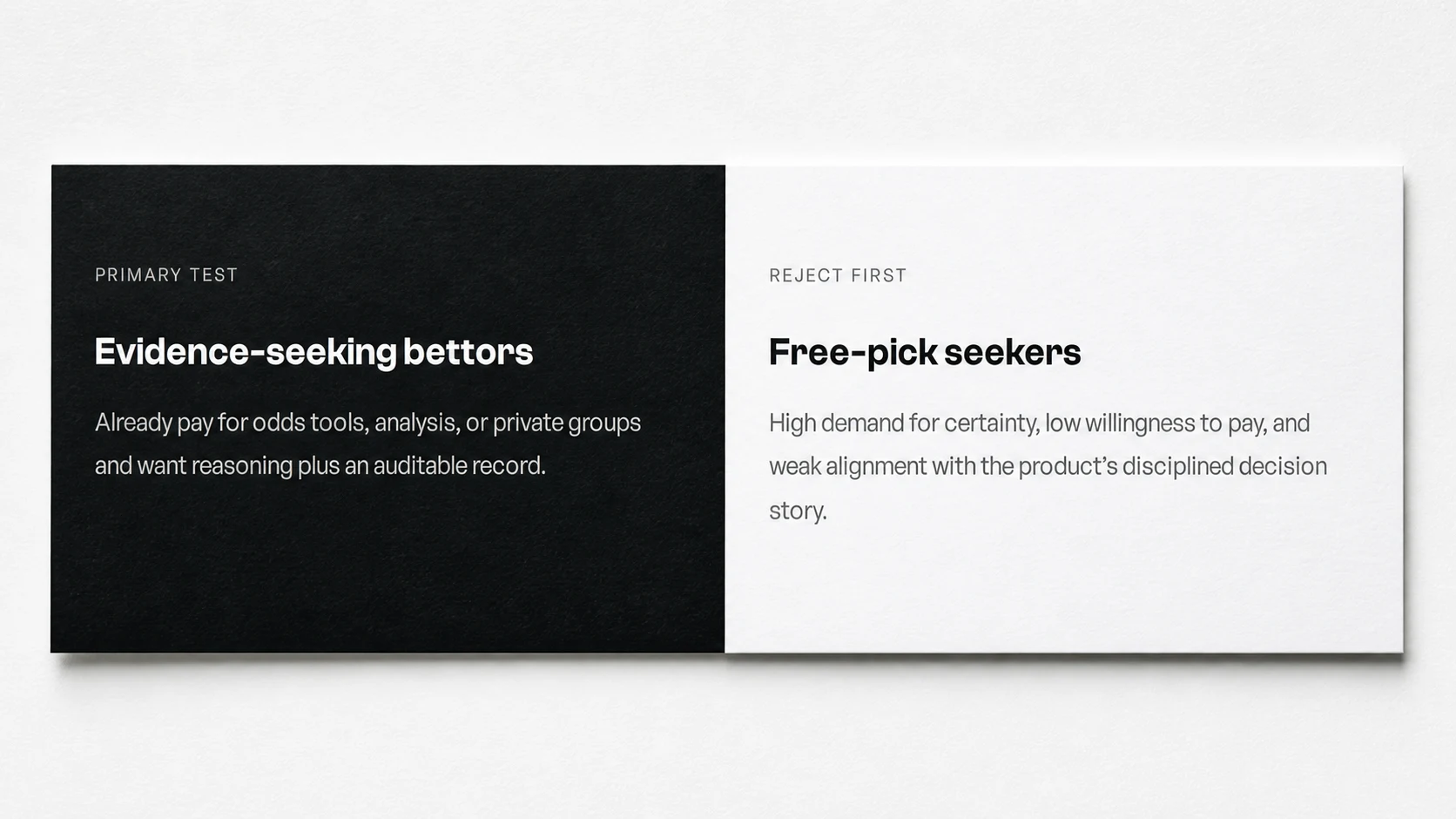
We don't start by trying to reach everyone. We start with a person or team that can understand the problem and give us candid feedback.
“The product was asking people to trust a pick before it showed them enough to make that trust reasonable.”
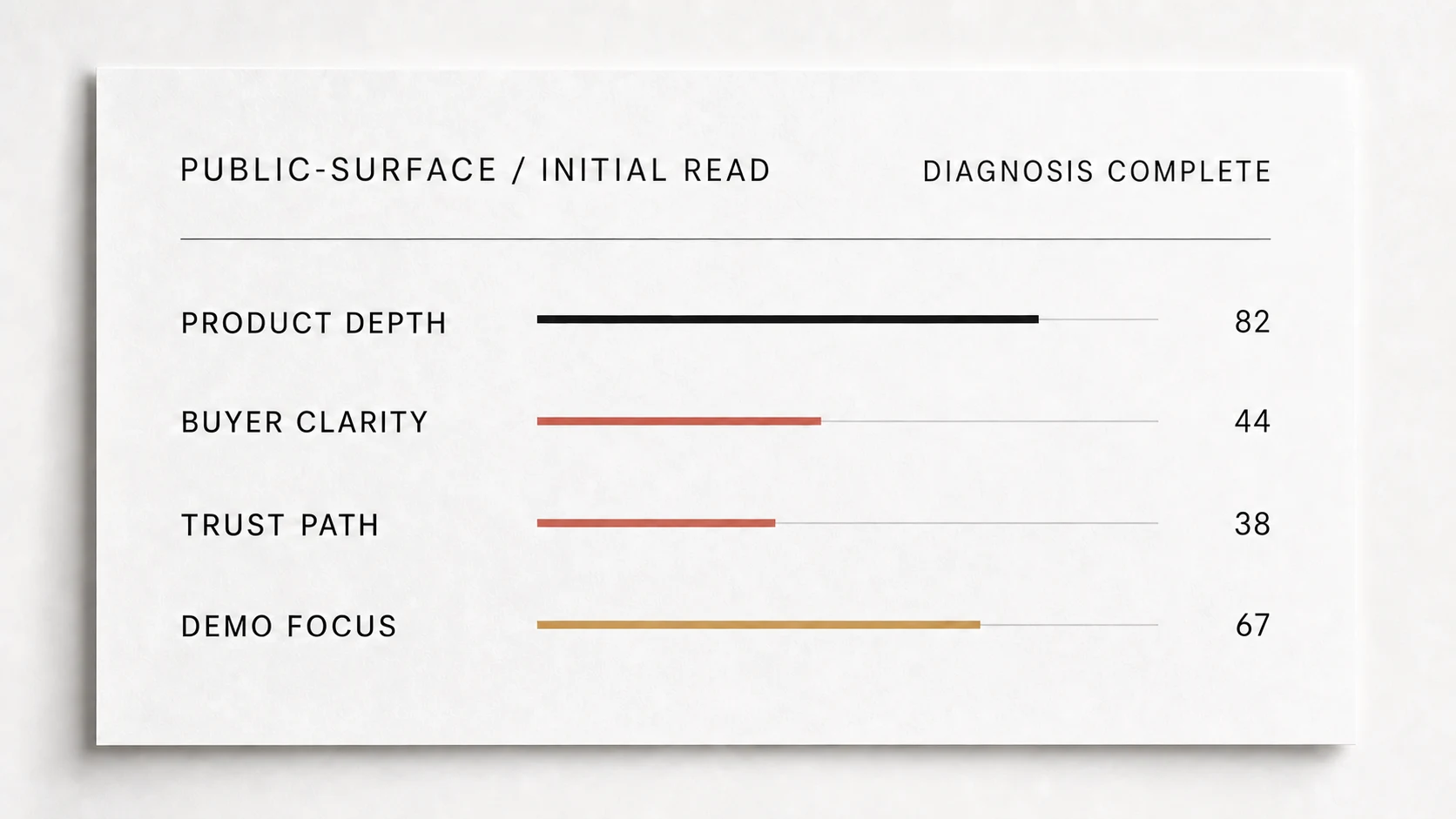
This came from an internal review of Bet Copilot. The fuller note looks at its public page, the way it asks for trust, and the first person worth putting it in front of.
Read the whole review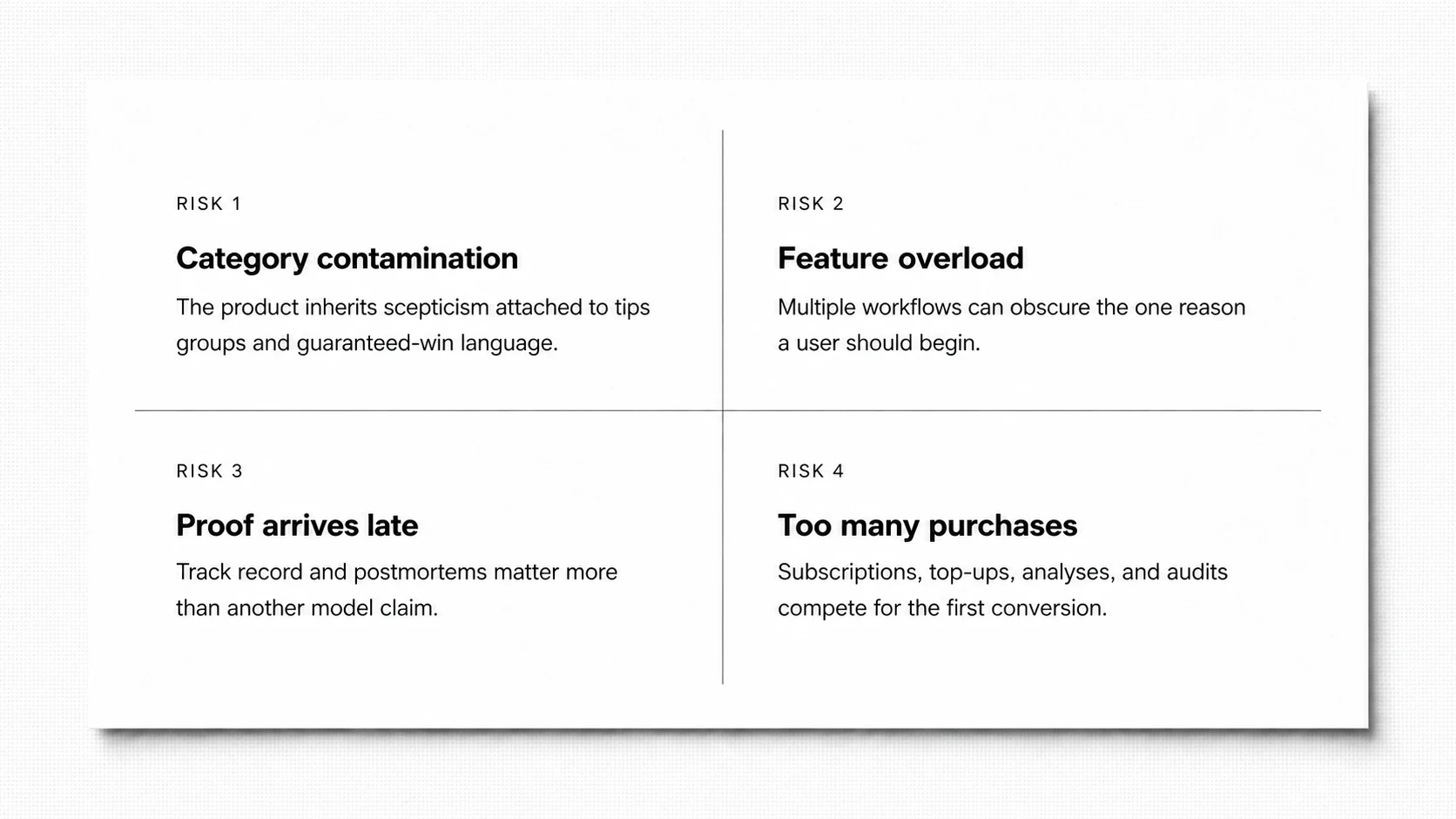
What a stranger misunderstands before they reach the useful part — and whether the problem is the product, the message, the audience, or the channel.
Named people, not personas: who they are, why they qualify, and how we reach them.
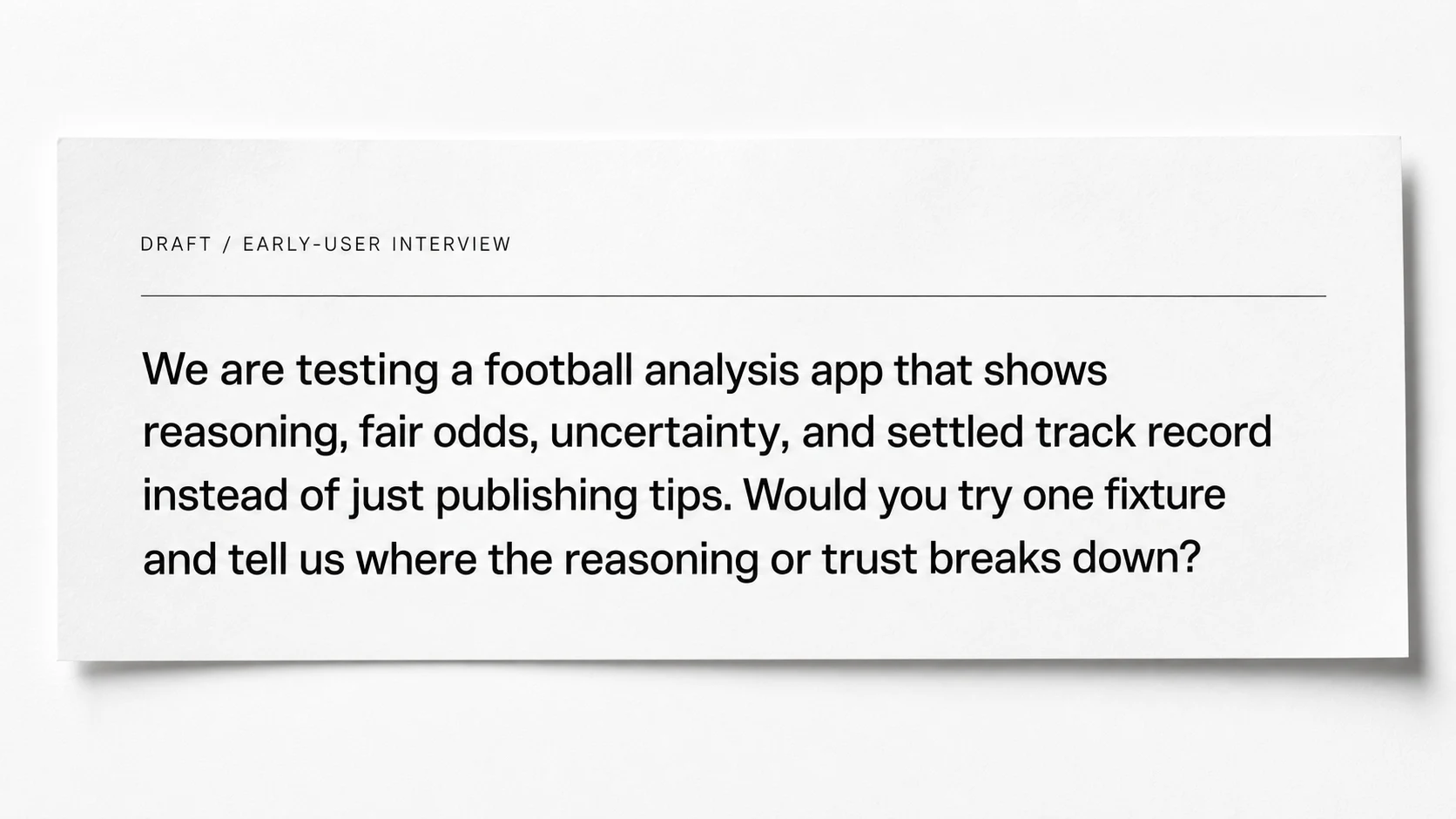
We specialize in gathering useful feedback through our network of channels, with proof of the work done.
We hand you back the data you need to make informed decisions, along with our recommendations.
Start with a clear answer, leave with a practical first move, or hand us the outreach completely.
You give us the context. Over ten business days, we identify the right audience, build a qualified prospect list sized to your market, develop the message, and run the outreach through the appropriate channels. We manage the sequencing, follow-ups, and deliverability. You receive proof of the work, the responses and patterns we found, and our honest recommendation for what to do next. The final scope depends on your market, the level of research required, and the channels we use.
You give us the context. We find the audience, run the outreach, and return the evidence you need to make an informed decision.
You walk us through the product, the problem it solves, your current assumptions, and any access limitations. We can work from a demo, documentation, recordings, or a founder walkthrough.
We identify the people most likely to understand the problem, then research and qualify the prospects worth approaching.
We develop the message, select the appropriate channels, manage the campaign, and document the work as it happens.
You receive the responses, objections, patterns, and silence — along with our recommendations for what to change, continue, or test next.
The review showed us we were asking people to trust a pick before we'd shown the reasoning that earns it. We rewrote the pitch around the pick and the reasoning behind it — and it finally said what we actually do. It gave us a clear message direction instead of another feature idea.
The read zeroed in on the wedge we were already feeling — sensitive documents and portal file limits. We'd been launching pages for those exact searches. It helped us separate the acquisition user from the paying user and gave us a tighter buyer hypothesis than we had.
Powered by